
Industry Projects

Autonomous on-demand transport systems for hospitals

MediCar 4.0

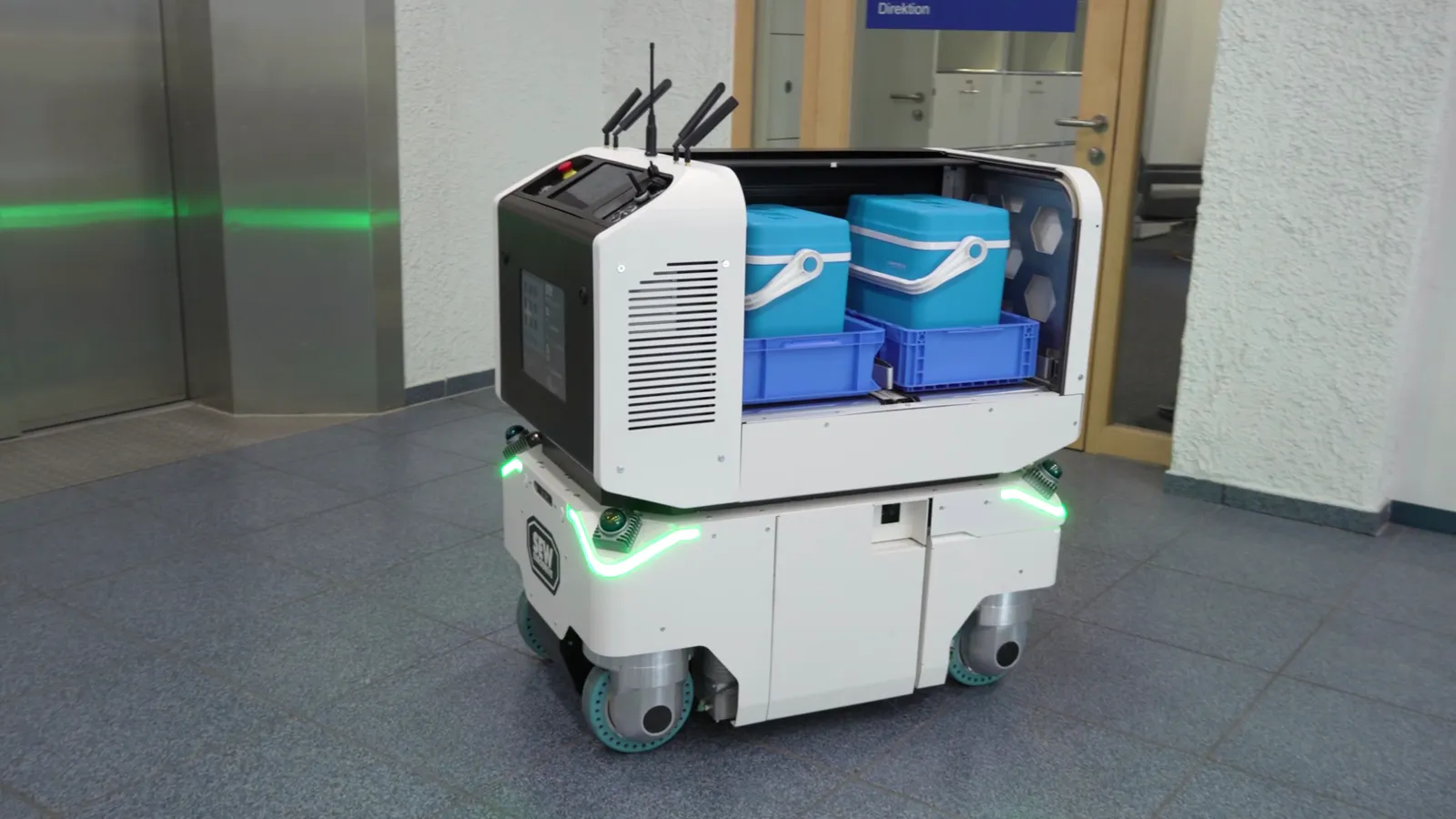
Blood samples, medication, supplies: MediCar 4.0 gets them where they are needed in the hospital, with autonomous transport vehicles. TU Clausthal develops the system together with the University Medical Center Freiburg and technology partners for autonomous driving. Our part: AI that adapts routes live, and robots that load and unload the transport boxes themselves.

Funding
BMFTR
Duration
09/2023 – 08/2026
Budget
EUR 3.5M
Pilot hospital
University Medical Center Freiburg
MediCar transport robot carrying blue transport boxes in a hospital lobby

Project film

MediCar 4.0 in the hospital

The robots on duty at the pilot hospital, and the people from the consortium who build them.

The idea

A hospital is not a warehouse. Corridors are busy, lifts are shared, and many transports cannot wait. MediCar 4.0 connects electric transport vehicles, handover stations and a shared data platform into one modular system, following the plug-and-work idea of Industry 4.0.

An urgent blood sample, for example, is placed in a handover box. A robot collects it, reports its position along the way and hands it over at its destination.

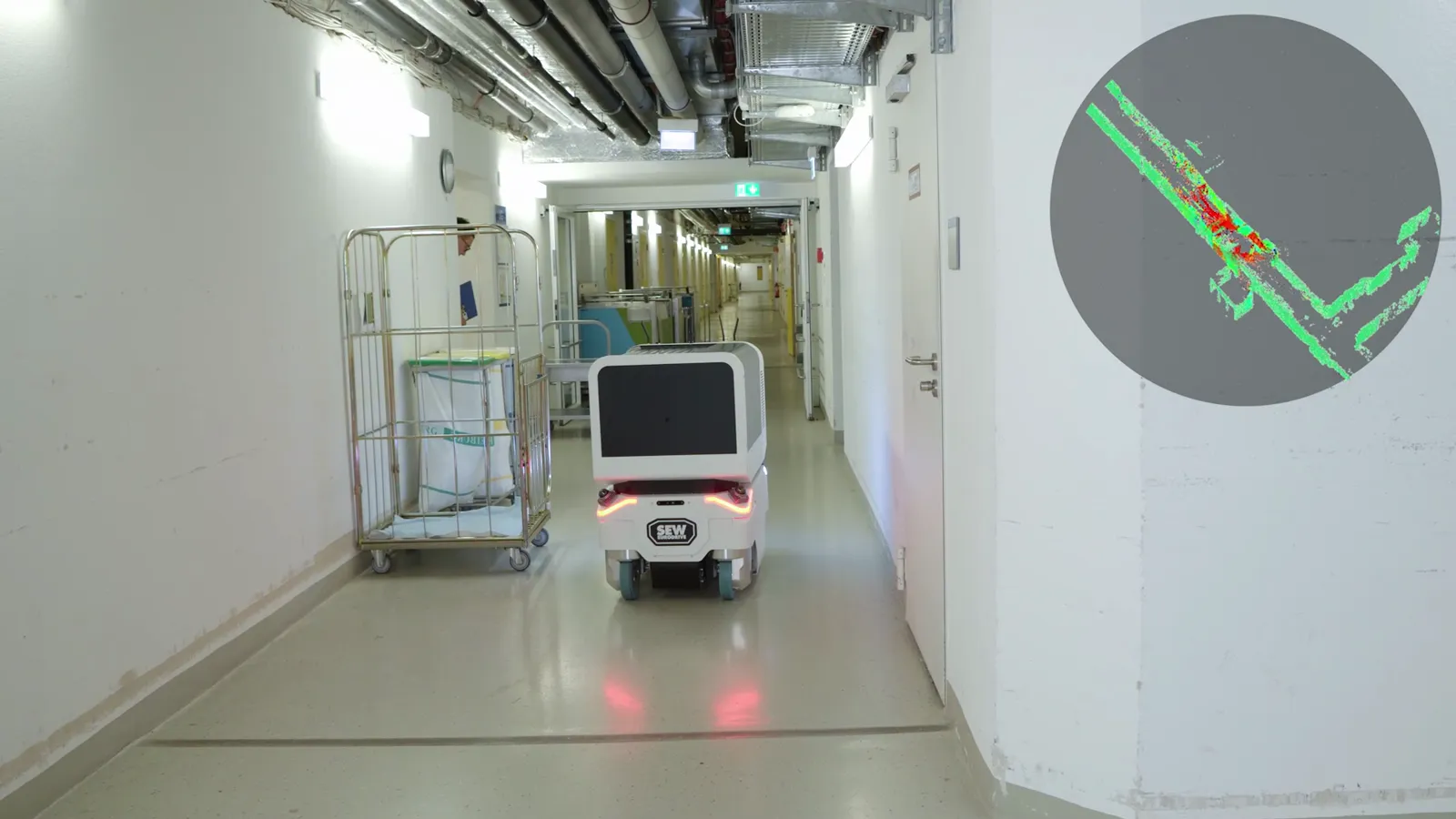
Transport robot in a hospital corridor, with an inset of its local map
In a hospital corridor: the robot continuously matches its sensor data against a map.

TU Clausthal

Our contribution

The team led by Prof. Dr. Christian Bartelt at the Institute for Software and Systems Engineering contributes two building blocks to MediCar 4.0.

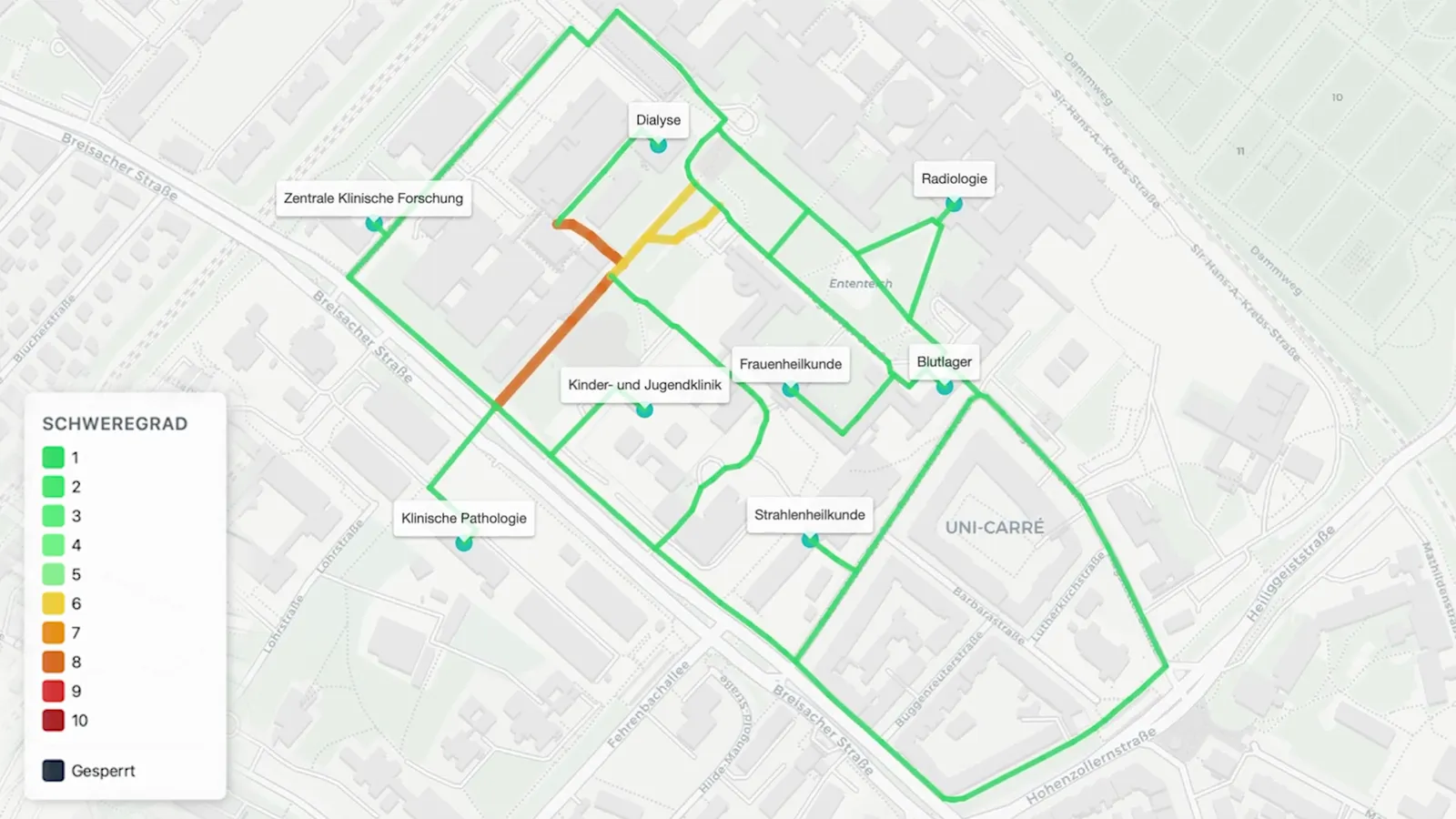
Path segments on the hospital campus, coloured by how severely they are affected.

Adaptive routing with language models

Classic route guidance only knows what was defined in advance. A blocked access road, an accident in the car park or a construction site throws it off. In MediCar 4.0, large language models evaluate reports from hospital staff and generate small programs that re-score individual path segments in real time. A routing algorithm continuously computes the best route from them, and staff can see on the map why a route has changed.
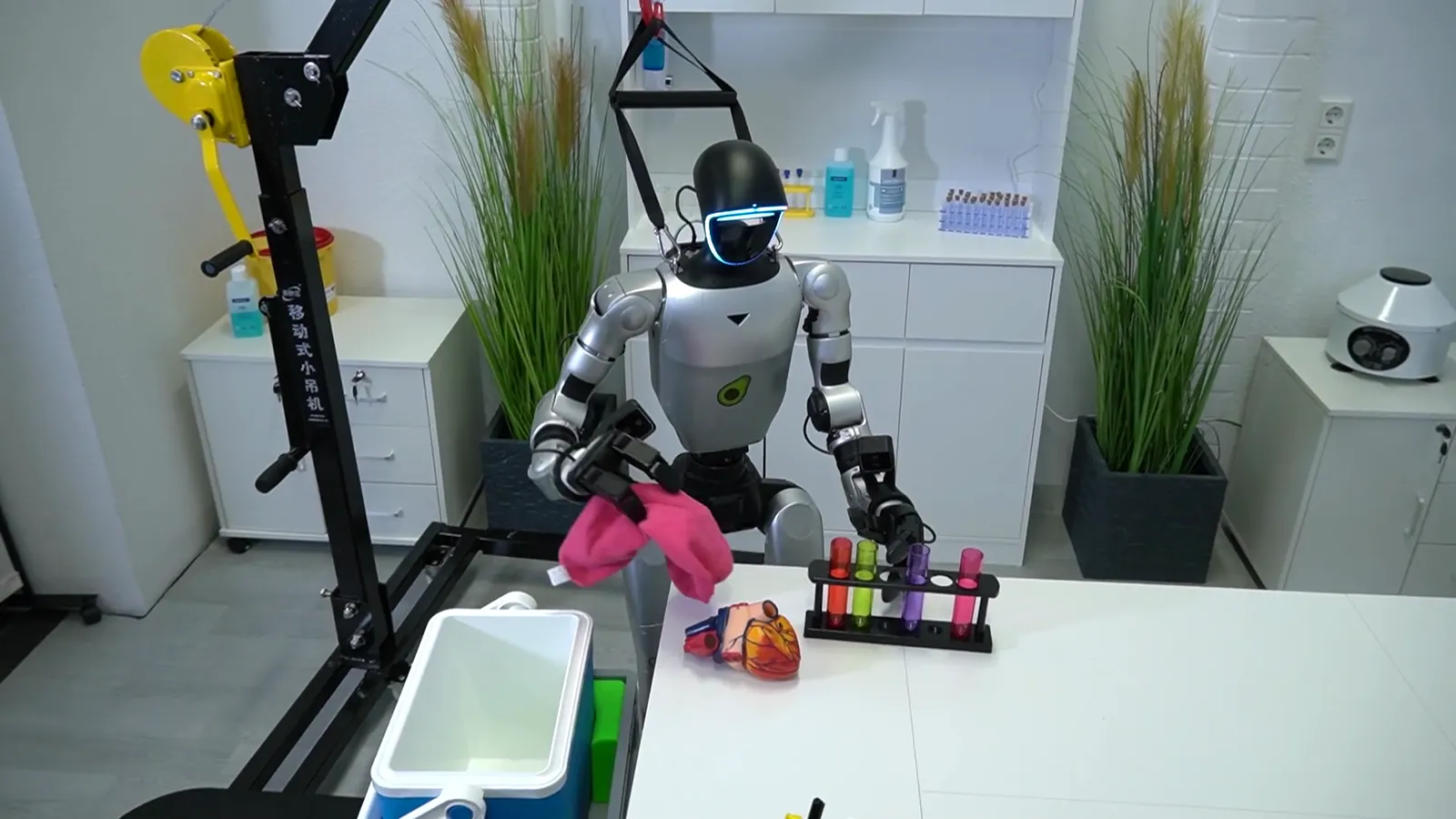

Humanoid robot in the lab at a bench with a cooler box and sample tubes.

Robotics: from simulation to practice

Today, people still load and unload the transport boxes. We are testing robots that recognise, grasp and place objects: a language model breaks each task into individual steps, and a trained controller carries out the grasping motions. Training and testing start in virtual, randomly varied hospital rooms, so many situations can be played through safely before a robot works in the real world. Transferring this to real hardware is the next step.

Computing power from the GenAI-Cluster

Both building blocks need a lot of computing power. On the GenAI-Cluster at TU Clausthal we train language models, generate and refine test datasets, and evaluate the routing across many scenarios. Because this runs on our own infrastructure, we can adapt models at any time and start experiments without waiting, and sensitive data never leaves the university, which matters especially in healthcare.

About the GenAI-Cluster

Tested in the hospital

Our components were integrated with the partners’ systems and tested in a field trial at the University Medical Center Freiburg. They are modular and plug into existing systems following the plug-and-work principle. In future, care and nursing facilities are meant to benefit as well. Several students have already worked on the topic in research projects and theses.

“With the GPU cluster, we can not only develop AI applications like MediCar 4.0, but also validate them thoroughly. That is what it takes for such systems to earn trust in a hospital.”

Prof. Dr. Christian Bartelt, project lead, Institute for Software and Systems Engineering

Project partners

Questions about MediCar 4.0?

We are happy to talk about AI for hospital logistics, adaptive routing and robotics.

Get in touch